It’s a Plastic World
- jimthefooddude
- Jan 27
- 5 min read
Updated: Jan 28
February 2022
I was standing in line at the grocery store the other day and I heard two people talking. They were in a penetrating conversation and not trying to keep their voices down or hide from anyone around them their topic. Their discourse was about plastic. Each was worried sick about how much is out there in our environment. How much we as consumers use and discard.
But most alarming to me in what I overheard in this retail discourse was on the topic of how much plastic is in places where we really don’t know we are using it, or where we only use it very briefly then throw it “away”. This was truly shocking! I inspected my grocery cart and sure enough, everything in it had plastic around it, in one way or another. Even my produce. This made me worry too. Enough to ponder plastic and do a little homework.
Plastic is not a new thing. But relatively so. It became popular after World War II and since then, we continue to produce more every year. As a matter of fact, much, much more. Currently there is not a single place on the planet where plastic is not found. We need to remember when we throw it “away”, that “away” does not exist. It just goes and sits elsewhere in our ecosystem.
So all the plastic that has ended up in the environment over the last forever, is still there. It never truly disappears. Like many things, much of it finds its way into our oceans. That is obvious. And unless you live under a rock you have heard about this. But it is not the only place of concern anymore.
Plastic or its remnants, are literally everywhere. That includes the water we drink and the air we breathe. It’s everywhere in the environment because it goes everywhere. Not just in my grocery cart. Like my grocery cart, it is in many products we use for a few seconds or minutes or hours — a coffee pod, a shopping bag, the wrap around my meat — and then it lasts for essentially eternity.
I recently read that a beached whale in the Philippines was found to have eighty-eight pounds of plastic, mostly bags and nets, in its digestive system. Millions of animals die with bags and nets and buckets in their guts or around their heads. Sad, to say the least.
Plastic doesn’t break down but rather breaks up into smaller and smaller particles, called microplastics. We also like to make microplastics on purpose. They have tons of uses and exist mostly in products where we wouldn’t expect them.
Microbeads, often used as abrasives, are added to cleansers, detergents, paint strippers, and cosmetics, and are so tiny that they escape from wastewater-treatment centers. Right back into our environment at large. So they end up everywhere. Your lungs, your intestinal tract. They have even been found in the placentas that nurture our unborn children. Not good.
So, what can we do about it? Well, that question needs to be on everyone’s agenda. An easy first step is to take recycling seriously. Instead of throwing out plastic bags, recycle them. Recycle bubble wrap, plastic grocery bags, plastic film, and other plastic packaging materials. Nearly my whole grocery cart that day was recyclable.
A good second step is that when you shop for items, shop wisely. Avoid buying items that are wrapped in plastic or have plastic bags inside the cardboard packaging. Cereal boxes are a good example of this. Choose brands that avoid plastic packaging and rely on wax-lined paper bags instead.
Maybe choose to bake your own bread once in a while, or purchase it from a bakery rather than buying factory-made bread that comes in plastic packaging. Buy your meat at a meat counter and use reusable coffee pods. If you are thinking about it, you can likely come up with a ton of your own ways to minimize the plastic in your life.
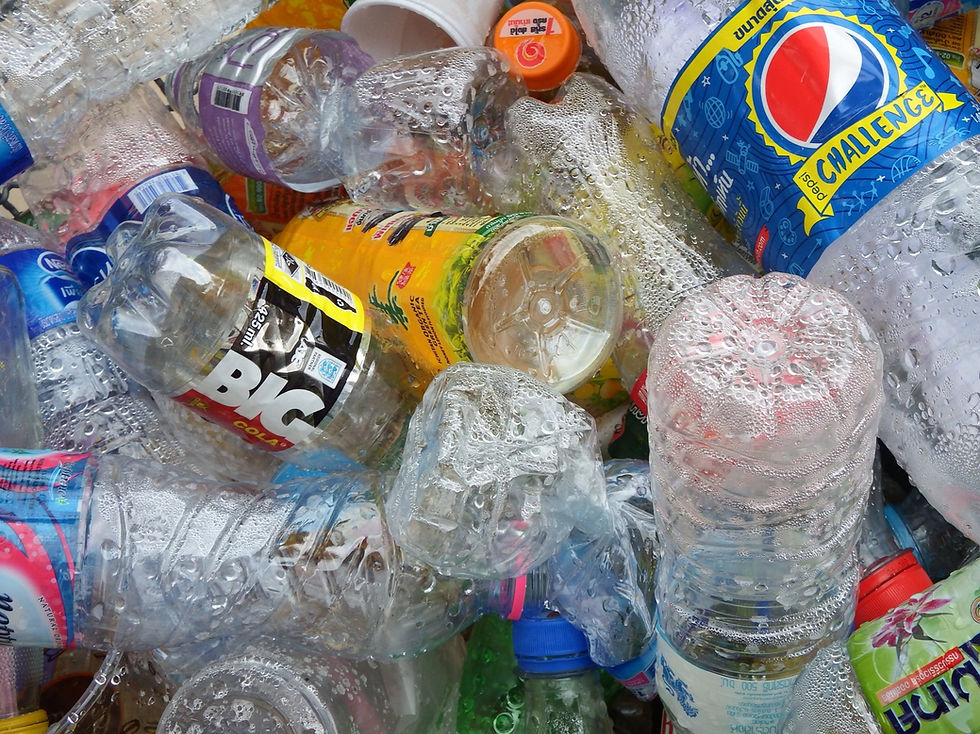
Water is worth talking about here. Plastic water bottles are a major issue as they are awful for the environment. And they certainly aren’t going away any time soon because of their practicality and convenience. I was startled to learn that Americans buy nearly 15 billion gallons of bottled water per year. It is estimated that 500 billion bottles of water are consumed globally on an annual basis.
And not to be taken lightly, but bottled water production uses up to 2000 times more energy than tap water production. And the environmental impact is not just for the leftover bottles themselves. The bottles are widely known for adding PFAS to the water they contain. And that is a term we all need to know a little more about.
PFAS stands for per- and polyfluoroalkyl substances. So, we are not talking about one chemical here but literally thousands of them. And none of them are any good for you or the environment they are proliferating. The problem is we count on them so much. They are the hidden little secrets that are prized for their indestructibility and non-stick properties.
They stain proof carpets, clothing, and furniture. They create the “non-stick” to cookware. They waterproof our electronics. And of course, they are a critical barrier within food packaging. The list goes on and on. Sadly, they are so robust that they won’t break down in the environment for thousands of years. Scientists call them “Forever Chemicals” just to make sure we understand how hardy these little devils really are. Now you know.
These human-made monsters are a part of nearly everything. Including the laptop I am using, the keypad I am typing on, and the screen I am staring at. So stopping the use of plastics altogether is not a realistic goal. It is obvious we must find a middle ground here. The steps above are a great start. We can all do more.
When shopping for items that contain plastic, look for brands that use recycled plastic. Then you’re helping support a circular economy by purchasing items made with these types of recycled materials.
Invest in a few reusable water bottles and travel cups. Instead of getting a plastic cup every morning at your work’s coffee station or water cooler, you can refill your travel cup. Use water filters at home if you worry about your water supply versus buying those nasty bottles of chemical soup we think of as clean water.
As always, knowledge is king. Talk about this with your friends and family. Educate yourself and them on this problem. Get them to be passionate and informed about what they put in their grocery carts and how they dispose of the remnants. Become an advocate for politicians that are like-minded and want to continue to support global recycling efforts. Often it takes a village to make a difference. As consumers, this is something we can begin, one shopping cart at a time. Start yesterday! Our planet depends on us. It’s the only one we will ever have.


Comments